
09.03.2026, 13:00
Big Walk Preview: A Whimsical New Adventure from the Creators of Untitled Goose Game
Big Walk, an upcoming multiplayer puzzle game from the creators of Untitled Goose Game, promises to be a delightful experience for friends looking for fun. After an exciting first hour, it seems poised to become the next favorite group activity.
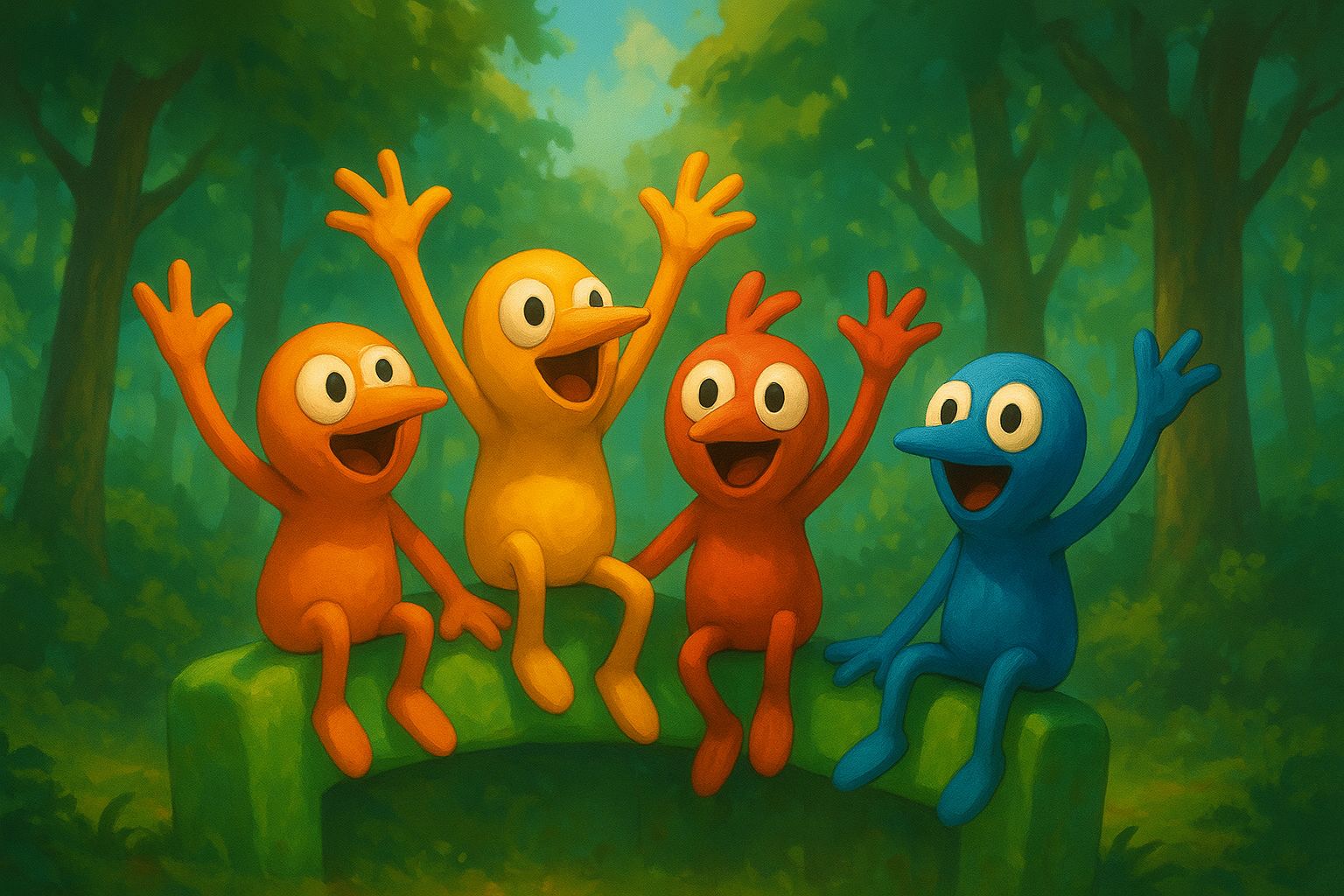
If the quirky charm of Untitled Goose Game is your kind of humor, then you should definitely keep an eye on Big Walk, the forthcoming multiplayer puzzle game developed by the same team. Set for release in 2026, this hilarious adventure taps into the growing genre of 'friendslop' games, similar to Lethal Company and Peak, utilizing proximity chat and zany mechanics to foster entertaining moments with friends. Based on my initial hour of gameplay, it appears Big Walk could become a go-to option for those who enjoy lighthearted online antics with their pals. Big Walk is designed as a cooperative puzzle-solving experience that emphasizes creativity and whimsical scenarios, while limited communication mechanisms play a crucial role. Unlike many titles in the puzzle genre that lean towards survival horror, this game presents a series of increasingly complex challenges that require teamwork. Players take on the roles of bizarre, bird-like creatures, scouring the island for oddly shaped key items while engaging in tasks like translating hieroglyphs into a codepad or forming human towers to access hard-to-reach locations. The lighthearted nature of these challenges ensures that, just like my group, players will likely spend more time joking around and crafting humorous stories about the absurd world they inhabit than actually completing objectives. Communication in Big Walk is limited to proximity chat, forcing players to rely on signs, gestures, and other non-verbal cues to convey information. This creates interesting challenges, especially when team members must split up to tackle puzzles. For instance, in one situation, a player needed to hold a button while I dashed off to retrieve a necessary item, prompting my teammates to use binoculars to verify my progress. To compensate for the communication constraints, the game features various arm movements that players can use to express themselves, such as raising arms, extending them sideways, or pointing. While the puzzles in the demo were straightforward enough that fancy hand signals weren't necessary, it's clear that these mechanics could pave the way for more intricate challenges in the future. During my session with Big Walk, every puzzle I encountered required collaboration, which I quickly realized after attempting a puzzle alone and finding it impossible to complete without assistance. This design choice not only fosters fun interactions but also prevents players from straying too far from one another, thus ensuring everyone is involved in the problem-solving process. Interestingly, puzzles adapt dynamically based on the number of players, accommodating groups of 2 to 4 participants. For example, one puzzle required us to stack atop one another to reach a button, with the button's height adjusted according to our team size. In another instance, we needed to press four buttons simultaneously to obtain our reward, and the number of buttons varied depending on how many players were present. While these examples were simple, I appreciate the idea that team participation is essential for advancement, and I can envision more complex puzzles that require everyone to play a crucial role, all while navigating communication hurdles. Beyond puzzles, Big Walk also includes elements designed purely for fun, such as a paintbrush that changes the colors of our quirky bird characters and a whimsical rest area that offered soothing music and beautiful views without any puzzles to solve. In a game focused on fostering silly memories with friends, it’s refreshing to see how well Big Walk balances gameplay with opportunities for light-hearted fun. My group fully embraced these moments, and much of our enjoyment stemmed from creating our own merriment within the game's bizarre environment. It was surprising how quickly we fell into a carefree state, reminiscent of childhood antics—a delightful experience that feels increasingly rare in today’s gaming landscape. While the concept of Big Walk might appear to lack longevity, with developer House House Games estimating a playtime of around 10 hours and puzzles not changing aside from player count adjustments, this isn't necessarily a drawback. Games designed for such short bursts of enjoyment can offer memorable experiences similar to an escape room. Although you may not revisit the same puzzles, the unique adventures and shared laughter with friends make it worthwhile. In a time when many games demand extensive hours of commitment, I truly cherish the chance to engage in these compact adventures that leave a lasting impression. It's worth noting that the version of Big Walk I played was on a Mac Mini, demonstrating its accessibility. Given that the gameplay mainly involves hopping around and stacking on top of each other, it’s impressive how approachable this game is, not just in terms of mechanics but also for players with varying hardware capabilities. This could make it an excellent choice for friends and family who are not typically gamers; after all, playing as whimsical bird creatures is a universally entertaining experience. After a thoroughly enjoyable first hour, I’m convinced that Big Walk will be the next fun-filled experience for my friends and me. If the puzzles were this entertaining in their simplest form, I can't wait to see how outrageous and unforgettable the game will become as more complex scenarios are introduced.