
22.03.2026, 11:00
Screamer Review
Despite some character flaws and sudden difficulty spikes, Screamer stands out as a distinctive and well-crafted racing game that feels like an intriguing blend of arcade thrills and anime aesthetics.
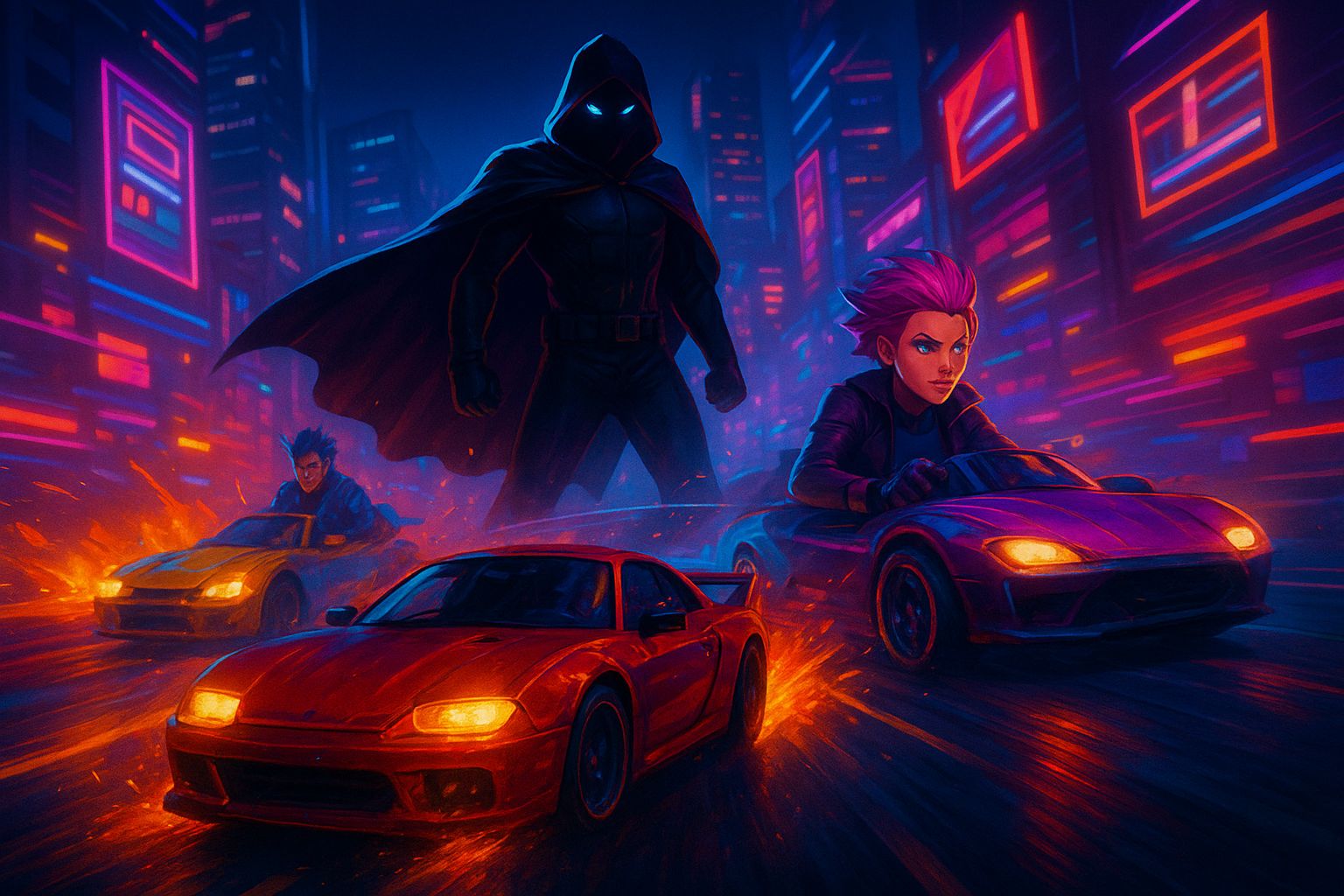
Screamer makes a bold statement with its vibrant, neon-filled visuals and high-energy arcade racing experience. It demands the precision of Wipeout combined with the strategic gameplay of Mario Kart, requiring players to constantly balance offensive and defensive maneuvers as they vie for position. The gameplay mechanics are intricate, utilizing both analog sticks to navigate corners and a semi-automatic transmission to generate essential boost energy. While Screamer presents a fresh take on a genre often lacking in innovation, it occasionally falters due to a few lackluster tracks that disrupt the momentum, some imbalanced challenges in its main tournament mode, and characters that don’t resonate on any meaningful level in the storyline. The mechanics of Screamer revolve around twin-stick racing, where the right stick controls the drift angle, swinging the back of the car out. This pendulum-like movement can be exaggerated with certain vehicles, discouraging their use, but the majority of cars offer an accessible experience. Players must fully engage with this system, as the left stick provides only minimal steering assistance for gentle turns; attempting a sharp corner without utilizing the right stick leads to a frustrating understeer. In addition to its unique steering approach, Screamer incorporates elements from fighting games in its power-up system, which relies on two interconnected meters. One meter is designated for boost, while the other pertains to combat, with the boost meter being the key to filling the combat meter. Each character has meters divided into varying sections, showcasing their unique strengths and weaknesses in boosting, attacking, and defending. This adds an interesting dynamic to gameplay, although some characters carry disadvantages that make them less suitable for specific tracks. For example, one character risks exploding if they collide with a wall while in attack mode, making them a frustrating choice on complex tracks. The more convoluted tracks tend to be the weakest aspect of the game, as they significantly reduce racing speed due to constant braking for tight turns. While Screamer feels exhilarating at high speeds, it becomes cumbersome at lower velocities. Conversely, the more open tracks, characterized by long straights and smooth curves, truly showcase the game’s potential. These tracks are where Screamer shines, particularly the stunning neon-lit urban circuits drenched in rain. The car designs in Screamer are impressively stylized, resembling characters that could have leapt from the frames of a 1990s anime series. With vibrant liveries, imaginative aerodynamic features, and quirky details, such as a vehicle with pop-up brake lights, it’s evident that developer Milestone had a great time crafting these machines, giving each car a distinct personality. Diving into the story mode, players follow five racing teams embroiled in what seems to be an illegal contest orchestrated by a mysterious masked figure. The cast is a blend of pop stars, astronauts, and mercenaries rather than traditional racers, all managed by a mechanic with a quirky appearance and his seemingly sentient dog who can drive. While this setup might feel peculiar given the staggering prize of 100 billion dollars, it aligns well with Screamer’s anime-inspired theme. The game boasts impressively illustrated characters and well-crafted cutscenes, showcasing Milestone's commitment to a polished aesthetic. From its engaging introduction to its vibrant cutscenes, significant resources have clearly been invested in the visual presentation. The dialogue is extensive, with characters speaking in their native tongues yet still understanding each other, thanks to a universal translator chip. However, players may miss some early conversations if subtitles are turned off, as the expectation that English settings would only disable English subtitles may not hold true. Screamer feels like a passionate homage to a hypothetical anime series, particularly with the involvement of Japanese animation studio Polygon Pictures. The partnership shines through, but at times, it feels as if players are jumping into the middle of an ongoing narrative. The initial story missions bombard players with character introductions and dramatic backstories, leaving many questions unanswered. Characters oscillate between brooding and overly enthusiastic, which can become tiresome due to their constant bickering. The narrative also shifts focus across the five teams, making it challenging to form a connection with any of the individuals. The game quickly immerses players in its story, beginning with a series of missions that guide them through the narrative. This approach serves as a tutorial, which is beneficial given the complexity of the gameplay. However, it may obscure the expansive content available beyond the story mode, potentially discouraging players who find the initial character-driven angst overwhelming. The inconsistent difficulty levels in tournament mode may frustrate some gamers. While I found most events manageable on standard difficulty, certain missions posed unexpected challenges. For instance, one task involved chasing a dog through one of the game's trickiest tracks. The goal was to successfully attack the dog’s car, but it proved to be a master at navigating turns, maintaining a frustrating lead. Eventually, I resorted to waiting on the track and attacking when it lapped me, leaving me unsure if this was an intended strategy. Other challenges can feel overly constrictive, diminishing enjoyment. One race required not only winning but also taking down two members of a team, all while navigating the complexities of positioning without leading the race. Additionally, the team in question had misleadingly colored icons, making the task even more confusing. While I appreciate a good challenge, I often question the fairness of obstacles that feel arbitrary and nonsensical.