
29.03.2026, 10:00
DLSS 5 Fails to Impress Compared to V-Rally 3 on Game Boy Advance
The gaming community has reacted negatively to DLSS 5, while nostalgia for the Game Boy Advance and its classic titles, like V-Rally 3, endures.
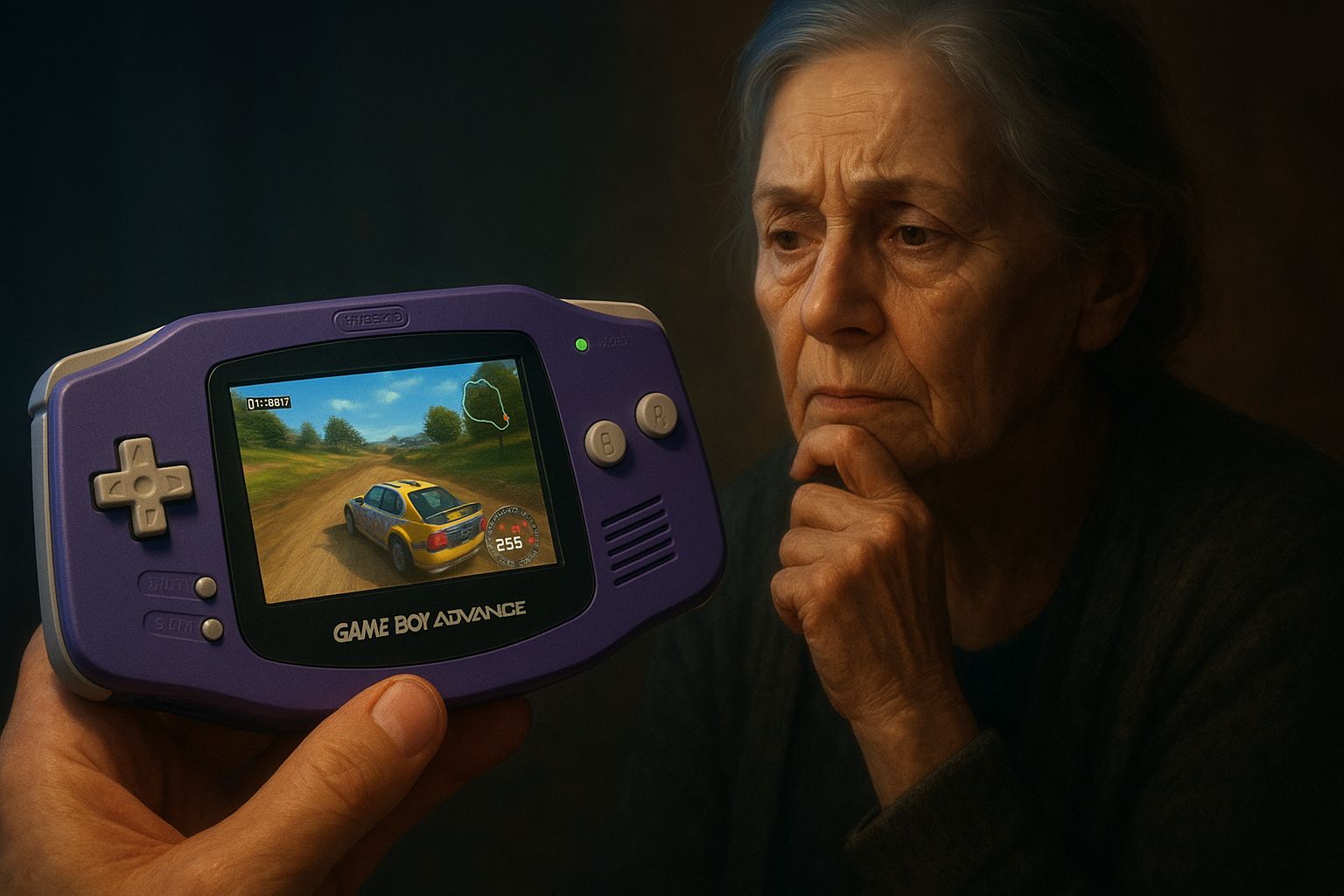
This week marked the 25th anniversary of a beloved Nintendo handheld, coinciding with heated discussions about the future of graphics technology. This milestone serves as a reminder that the relentless chase for higher graphical fidelity can often fall flat, especially when even the most advanced rendering techniques can't replicate the joy of playing V-Rally 3 on the Game Boy Advance. The GBA, with its modest 16MHz processor, managed to deliver an impressive 3D racing experience in V-Rally 3. This game represents a remarkable achievement in software development, transforming the GBA’s capabilities into a fully 3D racer that used textured polygons, innovative design choices, and just three volts of power. It provided an experience that rivaled the PlayStation 1, allowing players to enjoy console-quality gaming on the go, at a time when the PS1 was still widely popular. While compromises are often necessary, even for titles like The Witcher 3 on the original Switch, many players still embraced the experience, which sold exceptionally well. For a lot of gamers, the ability to play a game on portable, budget-friendly hardware outweighed concerns about graphical sharpness. This raises the question of whether those pushing for hyper-realistic graphics truly understand what gamers value. DLSS 5, Nvidia's latest technology aimed at enhancing video game graphics through AI-generated imagery, has received a lukewarm response since its controversial reveal. Many in the gaming community perceive it as a form of artistic degradation rather than a genuine enhancement. For those unfamiliar, DLSS 5 operates by replacing each frame with an AI-generated image, similar to technologies used in some social media applications. However, this method has proven to be far from profitable, leading to its removal from other platforms. Nvidia’s ambition with DLSS 5 is to achieve photorealism in gaming, a lofty goal that often veers into the uncanny valley. It's akin to transforming a classic film into a flashy Instagram filter, which doesn't do justice to the original artistry. During V-Rally 3’s development, many thought that achieving true 3D graphics on the Game Boy Advance was impossible. Yet, the game's developers, Fernando Velez and Guillaume Dubail, defied expectations, showcasing what the GBA could accomplish. Unlike many other titles that relied on tricks or pseudo-3D techniques, V-Rally 3 delivered authentic 3D tracks, with real depth and complexity, not merely a port of its PS2 counterpart. Velez and Dubail did not stop there; they later brought three additional PS2 titles to the GBA, each showcasing the console’s surprising capabilities. However, V-Rally 3 stands out as their masterpiece, blending thrilling gameplay with straightforward controls and a clean presentation. Its art may not align with realism, but it captures the essence of exhilarating racing, creating an emotional experience for players. In contrast, the reception to DLSS 5 has been tepid at best. Even those who try to see the positives struggle to give it genuine acclaim. Some commend its frame-to-frame consistency, but this feels like faint praise. The technology demands two high-end GPUs working in tandem, rendering it impractical for most gamers, especially when less expensive options can run games adequately. The concept behind DLSS, along with similar technologies, has historically had its critics. However, I have generally found its applications impressive. The ability to achieve real-time ray tracing through calculated sacrifices in image quality is a remarkable achievement, particularly in a landscape where technological advancement is facing physical limitations. Unfortunately, DLSS 5 seems to stray from this pragmatic approach, presenting a hefty cost without real gains. It fails to unlock new possibilities and instead muddles visual quality, leading to poor artistic decisions that detract from the original material. In the end, the stark contrast between the nostalgic charm of V-Rally 3 and the questionable enhancements of DLSS 5 serves as a reminder that sometimes, simpler can indeed be better.