
05.09.2026, 10:00
Tomb Raider: Legacy of Atlantis Holds Promise, Yet Raises Concerns
Tomb Raider: Legacy of Atlantis exhibits significant potential, but certain controversial elements like skill trees and excessive guidance may alienate longtime fans. Additionally, the food graphics leave much to be desired.
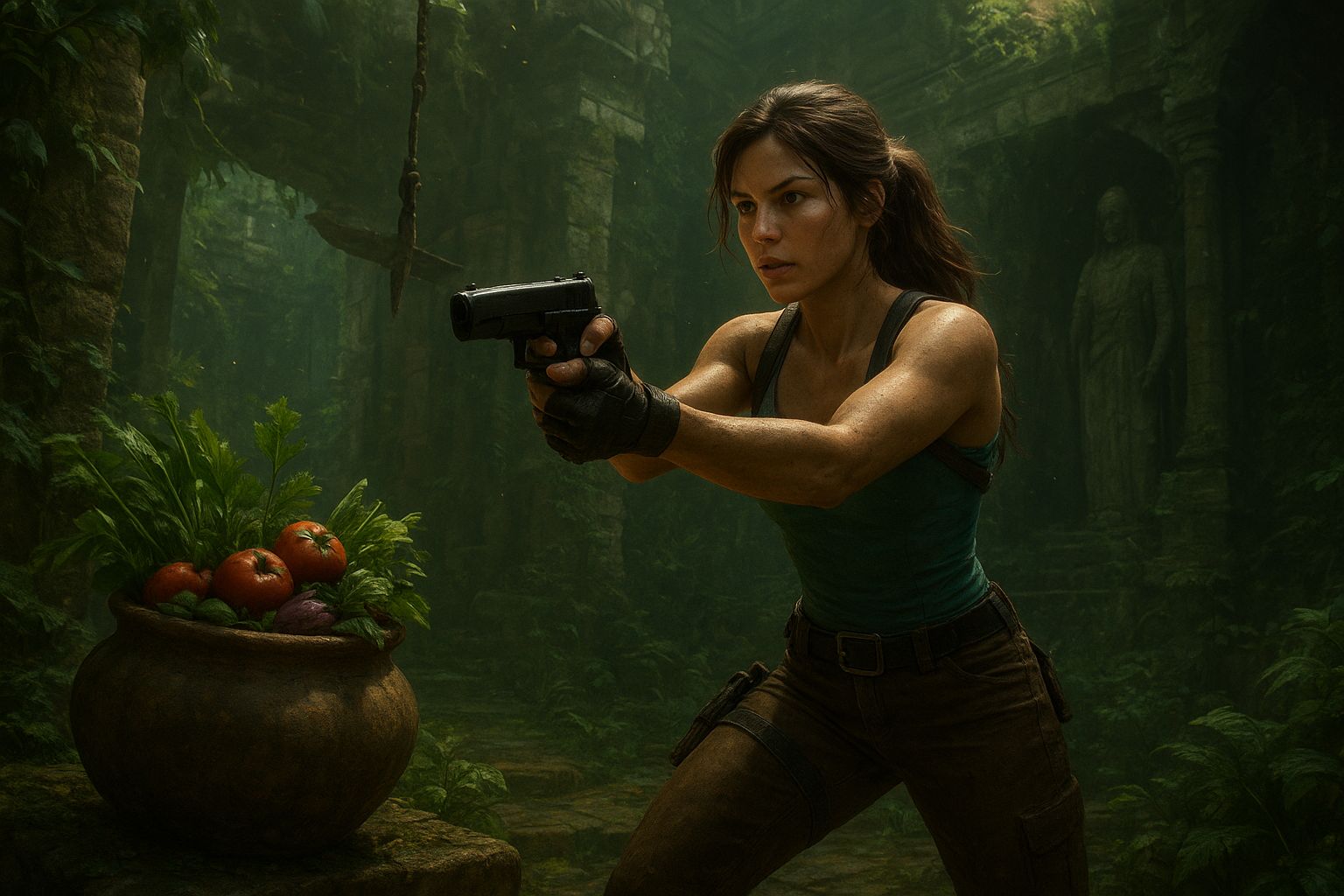
Upon experiencing the latest installment of Tomb Raider on a colossal 115” screen, one cannot help but be impressed by the game's visual quality. Legacy of Atlantis is strikingly beautiful, filled with intricate details that make even the smallest elements, like dust particles and bat droppings, feel threatening. This level of graphical fidelity is a far cry from the pixelated textures of the original 32-bit version. Raul Siqueira, the game’s director, aptly stated during our session that "the key to a successful remake lies in knowing what to modify and what to preserve." This principle is evident in Legacy of Atlantis, which successfully captures the essence of Lara Croft's iconic journey, making it a modern take on a classic adventure that holds a place in gaming history alongside titles like Super Mario Bros. The preview primarily showcased the game’s version of the Damocles Room, a notorious area filled with deadly sword traps that could spell doom for careless players navigating the tombs of ancient Greece. This area, characterized by its height and perilous jumps, solidifies Tomb Raider’s legacy of intricate traversal puzzles. Legacy of Atlantis retains these thrilling aspects, immersing players in a vast, awe-inspiring cavern where they feel minuscule against the backdrop of towering pillars and breathtaking god rays, a scale that was only hinted at in earlier console generations. Interestingly, the swords that hang ominously overhead are not the lethal obstacles they once were. In this iteration, they serve a purpose by allowing Lara to use them as platforms after they fall, effectively turning the dread of their descent into a mechanic that aids navigation. Unlike the real dangers of bat waste, dodging these swords is manageable, as players can trigger their drops from a secure distance. A comical moment occurs when Lara encounters a leopard, pausing to admire it before taking it down with a shot. My spontaneous laughter at this moment felt out of place in the otherwise serious atmosphere of the presentation. When I inquired during the following Q&A if this was intended to be humorous, the developers clarified that while Lara has her moments of wit, this entry aims for a serious tone. Fans hoping for a more self-aware narrative may find themselves disappointed. The game attempts to blend various interpretations of Lara Croft, creating a unified timeline that serves as a replacement for the original game and 2007’s Anniversary while also acting as a sequel to the Survivor Trilogy. This ambition presents challenges, as players must reconcile the differing portrayals of Lara across time. It’s a stretch to view these various incarnations as the same character, especially considering how each reflects the era it was created in. The game’s setting clearly does not align with the aesthetics or themes of the mid-2010s. There’s an argument to be made for a timelessness akin to The Simpsons, but one struggles to envision the 32-bit version of Lara Croft navigating modern technology. The earlier games infused a sense of playful parody, weaving in elements of adventure and espionage that resonated with the spirit of the 90s, a contrast to the more somber themes of the recent titles that focus on the darker aspects of Lara’s journey. The challenge lies in the decision to merge these distinct flavors of Tomb Raider, leading to questionable choices, such as incorporating survival mechanics like skill trees and crafting. These features seem included merely to align with contemporary gaming trends rather than serving a thematic purpose. If this is the pinnacle of Lara’s capabilities, why are players still unlocking skills? Why is there a need for survival mechanics when Lara is not stranded but is instead exploring at her own volition? Additionally, the implementation of a hint system and historical commentary feels unnecessary for a character of Lara’s background. While optional, it addresses a common critique of recent titles where Lara often converses with herself. These elements, while not dealbreakers, highlight an array of puzzling decisions. The studio's admission of using generative AI in development has sparked mixed feelings within the community. Some gamers are indifferent, while others express strong disapproval. This controversy hangs over the project, especially as players scrutinize the final product for signs of AI involvement. In particular, the depiction of food in Legacy of Atlantis raises eyebrows. Unlike the enticing culinary representations seen in other games, the meals presented here appear rather unappetizing, resembling slop rather than gourmet fare. While we cannot definitively attribute this to AI, it illustrates how even the faintest association can negatively impact perceptions. With several months until the game’s release, there is ample time to address these concerns and refine the elements that may have raised eyebrows, including the potential influence of generative AI. Fans remain hopeful that the final product will honor the legacy of the series while delivering a compelling experience.